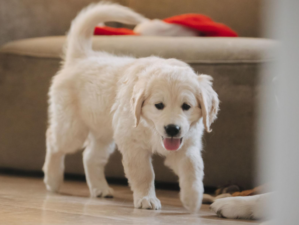
English Cream Golden Retrievers are known for their affectionate personalities, intelligence, and desire to be part of family life. They love spending time with their people, whether that’s enjoying a walk, playing in the backyard, or simply relaxing nearby. But what happens when you have to leave home for work, errands, or other daily responsibilities? Keeping your Golden Retriever happy and occupied while you’re away is an important part of maintaining their mental and physical well-being. The good news is that with a little preparation and consistency, you can create an environment that helps your dog feel comfortable, engaged, and settled even when you’re not home..
1. Start With Exercise Before You Leave
One of the best ways to encourage a relaxed dog while you’re away is to provide appropriate exercise beforehand. Golden Retrievers are active, energetic dogs who benefit from regular physical activity. A morning walk, a game of fetch, or some supervised backyard play can help your dog release energy and settle more comfortably afterward. Exercise doesn’t have to mean an exhausting workout. Age-appropriate activity that matches your dog’s fitness level is ideal. Try this: Before heading out for the day, take your Golden Retriever for a brisk walk or spend 15–20 minutes playing fetch. Allow time afterward for your dog to relax before you leave. Remember that puppies need shorter, gentler activities and plenty of rest as they grow.
2. Introduce Interactive Puzzle Toys
Golden Retrievers are intelligent dogs who enjoy having something to figure out. Interactive toys can provide mental stimulation and help prevent boredom. Puzzle toys encourage dogs to use their natural curiosity and problem-solving abilities. Some require your dog to move pieces to uncover treats, while others dispense small rewards as your dog interacts with them.
Consider:
- Treat-dispensing toys
- Snuffle mats designed for supervised use
- Food puzzles appropriate for your dog’s experience level
- Durable enrichment toys designed for dogs
Start with simple puzzles and gradually introduce more challenging options. Always choose toys appropriate for your dog’s size and chewing habits. Remove anything that becomes damaged or could present a choking hazard. Not every enrichment toy is suitable to leave with a dog unattended.
3. Make Mealtime More Interesting
Instead of always serving meals in a traditional food bowl, consider incorporating food-based enrichment into your dog’s routine. A portion of your Golden Retriever’s regular daily food can be placed in an appropriate puzzle feeder or treat-dispensing toy. This encourages your dog to work for their meal and adds an extra layer of mental engagement. You can also use a portion of their regular kibble during training exercises before you leave. The goal is to make mealtime more interesting without adding unnecessary calories or changing your dog’s nutritional routine.
4. Create a Comfortable Place to Relax
Keeping your Golden Retriever entertained isn’t always about providing activities. Sometimes, the best thing you can do is create a comfortable environment where your dog feels secure.
Designate a quiet area of your home with:
- A comfortable dog bed
- Fresh drinking water
- A few familiar, safe toys
- A comfortable room temperature
- A familiar resting spot away from household distractions
Some dogs enjoy having access to a window where they can observe the outdoors, while others settle better in a quieter area. Pay attention to your dog’s preferences and create a space that encourages relaxation.
5. Rotate Toys to Keep Things Interesting
If your Golden Retriever has access to the same toys every day, they may eventually lose interest. A simple solution is toy rotation. Rather than leaving every toy available all the time, keep a small selection accessible and introduce different toys throughout the week.
For example:
- Monday: A durable enrichment toy
- Tuesday: A puzzle feeder
- Wednesday: A favorite interactive toy
- Thursday: A different selection of safe toys
- Friday: A familiar favorite
Toy rotation can help make familiar toys feel interesting again without constantly purchasing new ones.
6. Consider a Midday Visit or Dog Walker
If you’re away for an extended period, a midday visit can make a meaningful difference. Depending on your dog’s age, temperament, and individual needs, a trusted dog walker, family member, or pet sitter may provide an opportunity for:
- A bathroom break
- A short walk
- Some interaction and companionship
- A little additional exercise
- A chance to check that everything is going well
Puppies generally need much more frequent bathroom breaks and supervision than adult dogs. They should not be expected to comfortably remain alone for an entire workday. Even adult dogs benefit from having their individual needs considered when planning time alone.
7. Teach Your Golden Retriever That Alone Time Is Okay
Perhaps one of the most important things you can do is help your Golden Retriever become comfortable spending time independently. Golden Retrievers are naturally social dogs, and many enjoy being close to their families. However, learning to relax when their people aren’t home is an important life skill. Begin by practicing short periods of separation while you’re still home. Gradually increase the amount of time your dog spends independently, rewarding calm behavior and keeping departures and arrivals relaxed. Avoid making a big production out of leaving or returning home. If your dog consistently displays excessive barking, destructive behavior, drooling, pacing, or attempts to escape when left alone, these may be signs of separation-related distress rather than simple boredom. In those situations, consult your veterinarian or a qualified behavior professional for guidance.
How Long Can an English Cream Golden Retriever Be Left Alone?
There isn’t one answer that applies to every Golden Retriever. Age, training, temperament, bladder control, health, and previous experience all play a role. Puppies need frequent bathroom breaks, supervision, and social interaction. Adult dogs may be able to manage longer periods, but that doesn’t mean they should routinely spend an entire day without a break. As a general rule, plan your dog’s schedule around their individual needs rather than simply how long they can physically tolerate being alone.
A Happy Golden Retriever Is a Well-Prepared Golden Retriever
English Cream Golden Retrievers thrive when they have a healthy balance of exercise, mental stimulation, companionship, and rest.While you can’t always be home, you can take steps to make the time you’re away more comfortable and rewarding for your dog. A little morning activity, an engaging enrichment toy, a comfortable resting area, and a consistent routine can go a long way.Most importantly, remember that your Golden Retriever doesn’t need constant entertainment. They need to feel secure, have opportunities to engage their minds and bodies, and know that their family will be coming home. At Recherche Kennels, we believe helping families build a wonderful relationship with their Golden Retriever goes beyond the day their puppy comes home. It’s about providing the knowledge, guidance, and foundation for a happy life together.
Because the best part of having a Golden Retriever is having a companion who is truly part of your family.