
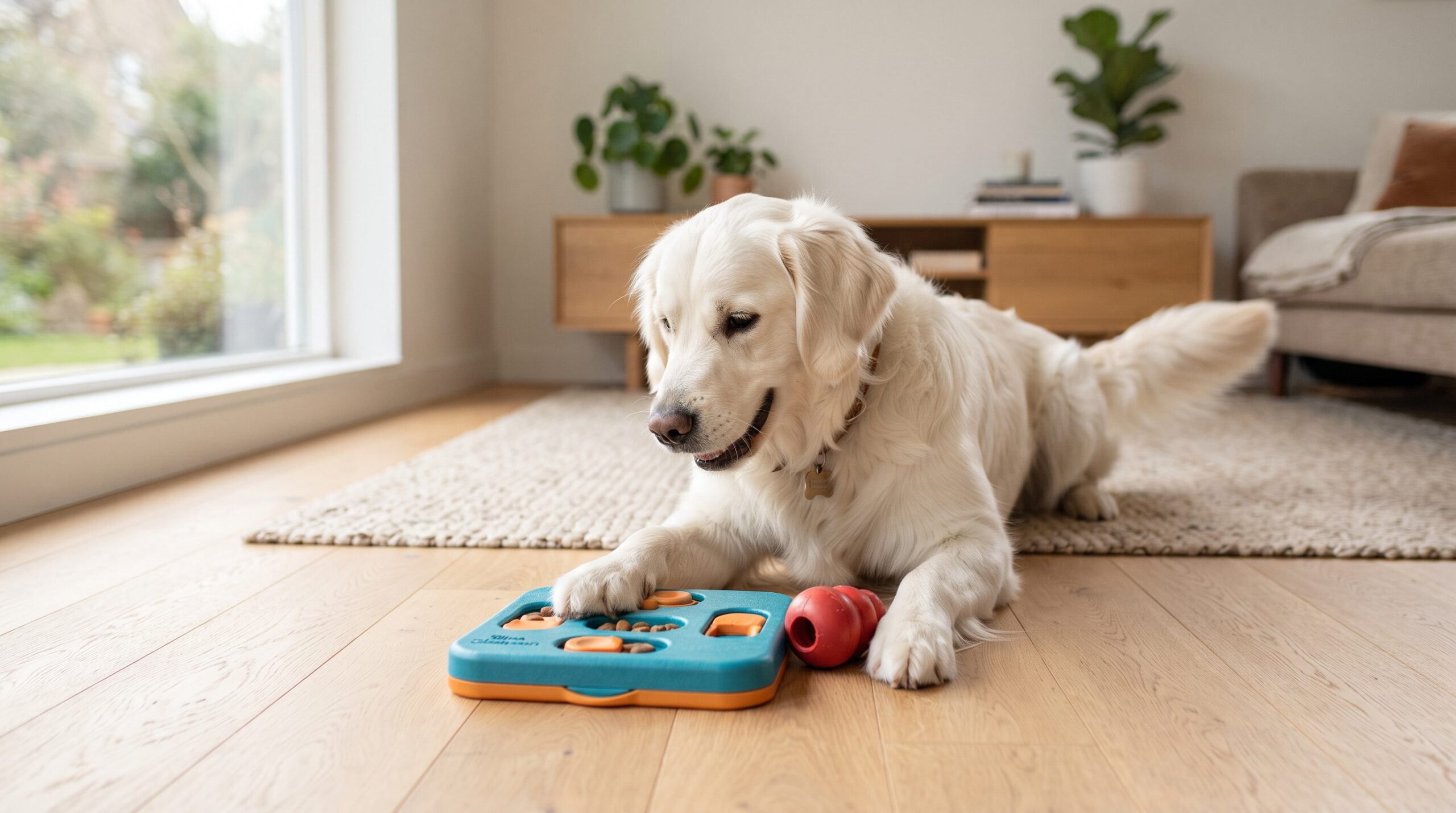
English Cream Golden Retrievers are known for their intelligence, affectionate personalities, and enthusiasm for life. Whether they are enjoying time with their families, exploring the outdoors, or learning something new, these dogs thrive when their minds and bodies have opportunities to stay engaged. One of the simplest ways to provide meaningful enrichment is through food puzzle toys. These interactive toys turn mealtime or treat time into an engaging activity that encourages your dog to think, explore, and work toward a reward. From young Golden Retriever puppies to mature adults, food puzzles can be a valuable addition to a well-rounded daily routine.
1. Encourage Mental Stimulation
Just as physical exercise helps keep a Golden Retriever active, mental enrichment helps keep their minds engaged. Food puzzle toys encourage dogs to use their natural problem-solving abilities. They may need to roll a toy, move a sliding compartment, lift a flap, or figure out how to release a few pieces of kibble. These activities provide an opportunity for your dog to think through a challenge and discover what works. For intelligent breeds like the English Cream Golden Retriever, incorporating mental stimulation into the day can make everyday routines more interesting and rewarding.
2. Help Reduce Boredom
Dogs need more than food, water, and a comfortable place to sleep. They also benefit from activities that give them something constructive to do. When dogs do not receive enough enrichment, they may become bored and look for their own entertainment. Depending on the individual dog, this might include excessive chewing, attention-seeking, or getting into things they shouldn’t. Food puzzle toys offer an appropriate outlet for curiosity and natural foraging behaviors. They can be especially useful on rainy days, during quiet afternoons, or when outdoor activities are limited.
A few minutes of purposeful enrichment can add variety and interest to your dog’s day.
3. Make Mealtimes More Engaging
Many Golden Retrievers are enthusiastic eaters. While that enthusiasm is part of their charm, some dogs may eat their meals faster than they should. Using a food puzzle toy for part or all of a meal can encourage a slower, more interactive eating experience. Instead of consuming their food from a bowl in a matter of moments, dogs may spend additional time working to access individual pieces of kibble.
This can make mealtime more stimulating and may help some dogs who tend to gulp their food. Food puzzles are not a substitute for veterinary-recommended feeding methods, and they do not guarantee that a dog will eat slowly. Always choose a toy appropriate for your dog’s eating habits and supervise its use.
4. Support Natural Foraging Behaviors
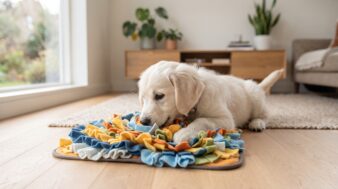
Dogs have an instinctive interest in searching, investigating, and using their noses to discover interesting things. Food puzzle toys can encourage these natural behaviors by allowing dogs to work for small food rewards. Snuffle mats, treat-dispensing toys, and simple food-search games can all provide opportunities for dogs to explore with their noses and paws. For an English Cream Golden Retriever, these activities can be a fun way to add variety to the daily routine while encouraging curiosity and engagement.
5. Build Confidence Through Problem-Solving
Successfully completing a puzzle can be rewarding for a dog. Finding a hidden treat or figuring out how to move a toy may encourage them to try another challenge. For puppies, simple food puzzles can provide opportunities to explore new experiences in a positive way. For adult dogs, gradually introducing more challenging puzzles can help keep enrichment interesting. The key is to choose activities that are achievable. If a toy is too difficult, a dog may become frustrated or lose interest. Start with an easy puzzle and increase the challenge gradually as your dog becomes comfortable.
6. Create Positive Training Opportunities
Food puzzle toys can complement positive-reinforcement training by making food rewards more interesting and purposeful. For example, a family might use a portion of a dog’s daily kibble for a simple enrichment activity after practicing basic skills such as sit, wait, or coming when called. Puzzle toys can also encourage dogs to focus on an activity independently while their family members are nearby. They should not replace social interaction, training, or exercise, but they can be a useful part of a balanced routine.
7. Provide Enrichment for Dogs of Different Ages
Food puzzles can be adapted to suit many stages of a Golden Retriever’s life. Golden Retriever puppies begin with easy, age-appropriate enrichment activities. Simple treat-dispensing toys or supervised food searches may help introduce the idea of working for a reward. Choose puppy-safe products, avoid overly difficult puzzles, and always consider your puppy’s developing teeth and chewing habits.
Adult Golden Retrievers
Adult dogs may enjoy a wider variety of food puzzles, including interactive toys, snuffle mats, and more challenging activities. Rotating different toys can help prevent enrichment from becoming repetitive.
Mature and Senior Golden Retrievers
Older dogs can also benefit from food puzzles, provided the activity is suited to their mobility, vision, cognition, and chewing ability. Gentler puzzles that do not require excessive movement or force may be more comfortable for mature dogs.
8. Encourage Healthy Enrichment Without Adding Excess Calories
One of the easiest ways to incorporate food puzzles into your dog’s routine is to use a portion of their regular daily meal rather than adding extra treats. For example, some of your Golden Retriever’s kibble can be placed inside an appropriate food-dispensing toy or used in a supervised food-search game.This allows your dog to enjoy an engaging activity while helping you keep track of their overall food intake.If you use treats, remember to account for them as part of your dog’s daily nutrition. Your veterinarian can help you determine appropriate portions based on your dog’s age, weight, activity level, and individual needs.
Choosing the Right Food Puzzle Toy
Not every food puzzle is suitable for every dog. When selecting one for your English Cream Golden Retriever, consider:
- Your dog’s age: Puppies and mature dogs may need simpler or gentler options.
- Difficulty level: Begin with a puzzle your dog can solve successfully.
- Durability: Golden Retrievers can be enthusiastic chewers, so choose a sturdy, appropriately sized toy.
- Safety: Avoid toys with small pieces that could be swallowed or become choking hazards.
- Ease of cleaning: Food residue can build up inside toys, so washable designs are helpful.
- Supervision: Monitor your dog during use, especially when introducing a new toy.
If your dog begins chewing pieces off a toy, becomes frustrated, or shows signs of guarding food, discontinue the activity and seek guidance from a qualified professional or veterinarian as appropriate.
How to Introduce a Food Puzzle Toy
Introducing a food puzzle should be a positive experience.
- Start with a simple toy that allows your dog to access food easily.
- Place a small amount of their regular kibble or an appropriate treat inside.
- Let your dog investigate the toy at their own pace.
- Offer encouragement when they interact with it.
- Gradually introduce more challenging puzzles as their skills develop.
- Clean the toy after use and inspect it regularly for damage.
The goal is not to make mealtime frustrating. It is to provide an enjoyable opportunity for your dog to think, explore, and work for a reward.
Make Enrichment Part of Your Golden Retriever’s Routine
Food puzzle toys are a simple 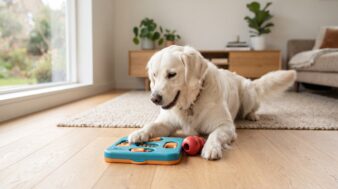 way to add mental stimulation, variety, and engagement to your English Cream Golden Retriever’s day. They can make mealtimes more interesting, encourage natural foraging behaviors, and provide a constructive activity for dogs of many ages. At Recherche Kennels, we believe that helping a dog thrive involves more than physical care. Meaningful enrichment, positive experiences, and a thoughtful daily routine all contribute to helping families build a rewarding life with their canine companions.
Whether you are raising a Golden Retriever puppy or welcoming a mature dog into your home, a food puzzle toy may be a small addition that makes a big difference in your dog’s daily enrichment.
Looking for more ways to keep your Golden Retriever happy and engaged? Explore our English Cream Golden Retrievers and learn more about finding the right companion for your family.